Museum of Sydney: Permanent display
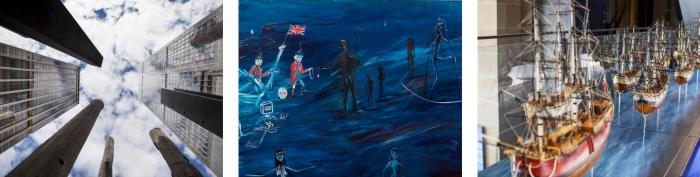
Free permanent exhibitions at Museum of Sydney.
Open 7 days: 10am-5pm
Yura Nura: People & Country
First Fleet Ships
Yura Nura: People & Country
Yura Nura: People & Country presents contemporary Aboriginal reflections on the history of Sydney and colonisation
The relationship between the British and Aboriginal peoples largely began around Warrane (Sydney Cove) on the site where the first Government House was built and the Museum of Sydney now stands (near present-day Circular Quay). From its construction in 1788 to its demolition in 1845, the first Government House was the centre of colonial power in Australia. Imposing British law on Aboriginal people, orders were issued and multiple governing documents were signed within its walls that had, and continue to have, direct impact on Indigenous people across Australia.
This display provides a glimpse into the complex relationship between this significant site and Aboriginal people, culture and land, then and now. Arrernte/Kalkadoon filmmaker Rachel Perkins' award-winning documentary First Australians explores key events in the early years of the colony and includes personal reflections on the impacts still felt by Aboriginal people today. Three artworks by Gordon Syron, a Worimi/Biripi man from the mid-north coast of NSW, offer a contemporary artistic interpretation of the arrival of the First Fleet in Sydney Cove in 1788 and its continuing legacy.
First Fleet Ships
This display explores the journey, arrival and first contacts of this fleet's largely unwilling human cargo
In 1788, after more than eight months at sea, the First Fleet landed, transporting some 1500 people to set up a new penal colony for Britain at the far end of the earth.
This display explores the journey, arrival and first contacts of this fleet's largely unwilling human cargo.
The First Fleet models on display at the Museum of Sydney were built by modelmakers Lynne and Laurie Hadley following nine years of painstaking research into original plans, drawings and British archival documents. Each ship is built on a 1:48 scale, from western red cedar or Syrian cedar.
❊ Key Information ❊
Official Tickets
Authorised Ticket Partner
Book via Mhnsw.au
When
Happens: Monday, Tuesday, Wednesday, Thursday, Friday, Saturday, Sunday
Where
Museum of Sydney View Venue
Cnr Phillip St and Bridge St Sydney New South Wales 2000 Map
✆ Venue: 61 2 8239 2211
Cnr Phillip St and Bridge St Sydney New South Wales 2000 Map
✆ Venue: 61 2 8239 2211
Official Links
→ Disclaimer: Details can change at any time. Always check with the advertiser before making plans, buying tickets or proceeding .. more
Update Page Upgrade Advertising